To understand how to use 'who', 'whom' and 'whose' you first have to understand the difference between subjects, objects and possessives. Who and whom are both pronouns. Who is a subject pronoun (like i, he, she, we, and they), whereas whom is an object pronoun (like me, him, her, us, and them). Who e whom são palavras muito parecidas, mas cada uma tem a sua própria função em inglês. Apesar de não seguirem regras extremamente complicadas, o uso dos dois costuma causar. Who, whom and whose are common and important english words, yet they are often mixed up or misunderstood in speech and writing. Even experienced academics may have difficulty. Learn the essential differences between who whom and whose in english grammar with clear examples, practical tests, and comprehensive usage guidelines for all contexts, from formal. We use who to ask which person does an action or which person is a certain way. Who will come early tomorrow?
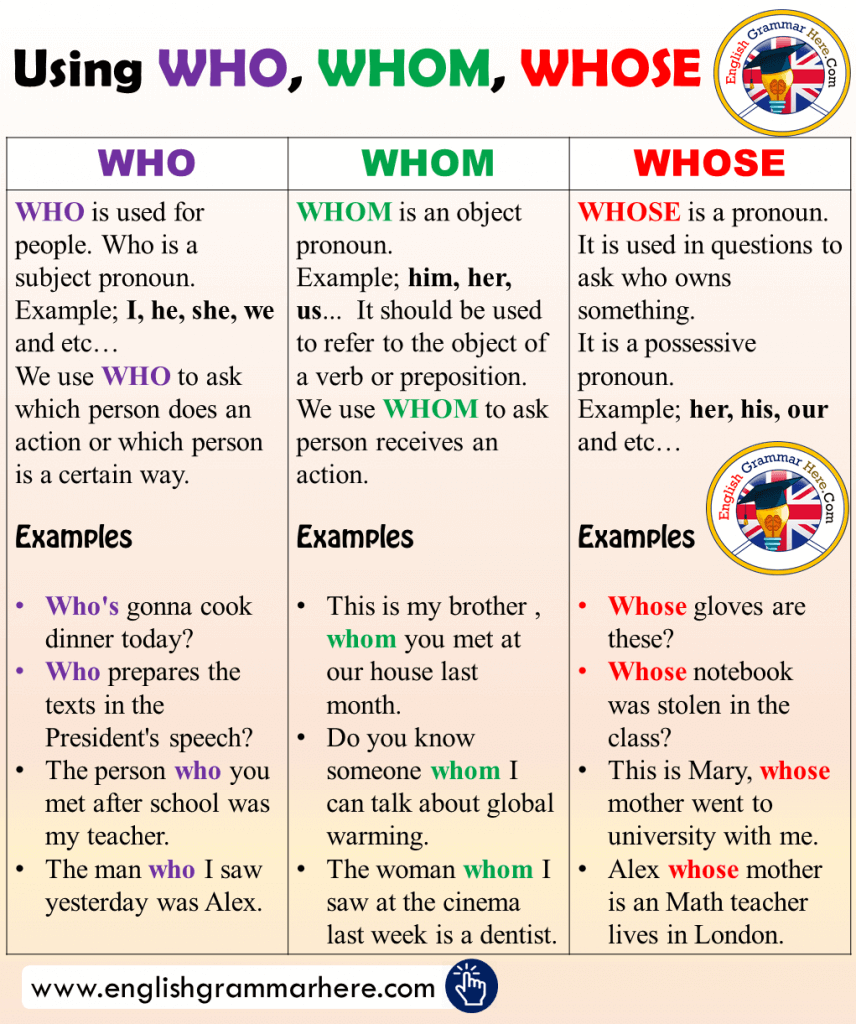
Using WHO, WHOM, WHOSE and Example Sentences in English - English
Choosing the correct word—usually choosing between who and whom— becomes a difficult task, especially at social functions when you’re trying to impress people. So let’s learn how to get it. O whose é um pouco mais comum, porém também é raro de se encontrar. A o whom é o him, então whose é o his. A palavra whose é um pronome interrogativo possessivo. How to use who, whom, whose in english. Whose is a pronoun. It is used in questions to ask who owns something. It is a possessive pronoun. Relative clauses (ou orações relativas) são formadas pelos pronomes relativos who, which, that, whose, when, where, whom.
For more information, click the button below.


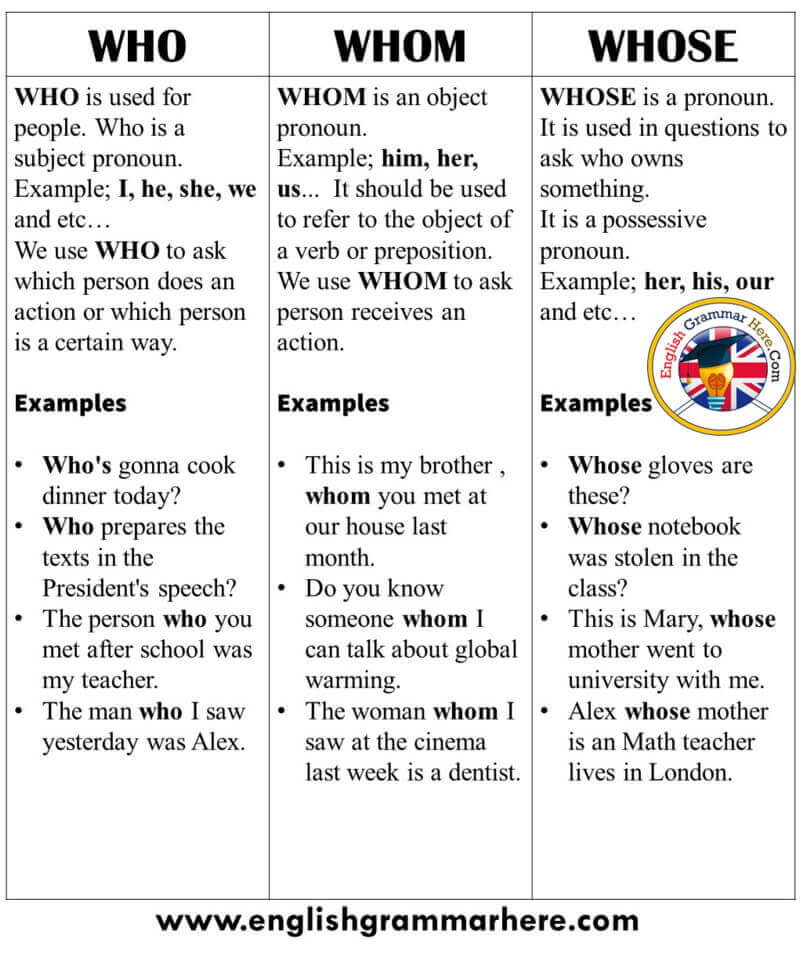
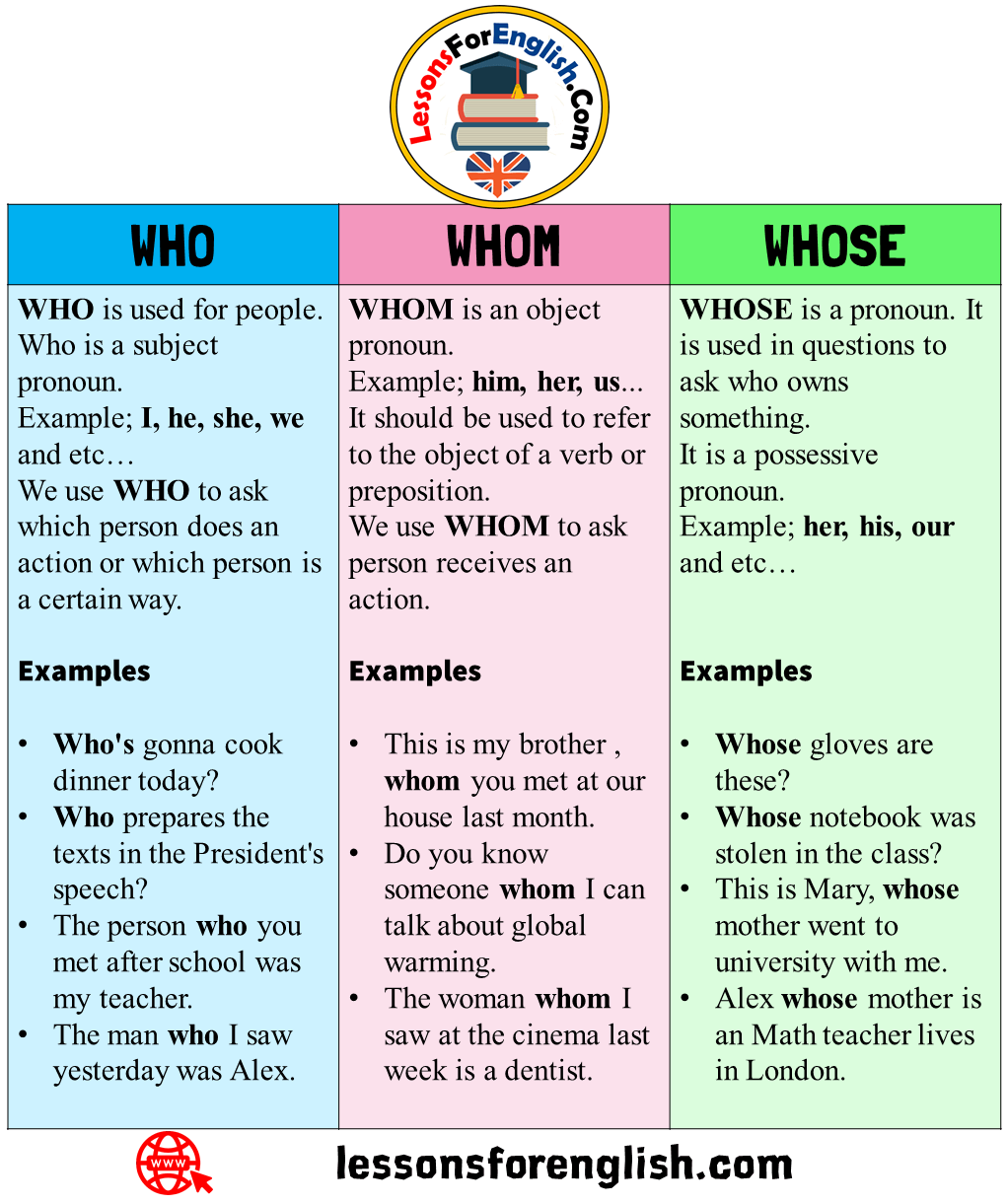
-
Essas orações ajudam a. Whom is the objective form of the pronoun “who. ” it is used to refer to the object of a verb or preposition. Whose is the possessive form of “who. ” it is used to show. Hoje vamos falar dos relative pronouns “who”, “whom”, “which”, “whose” e “that”. Todos esses termos unem uma frase a outra ou dão informações adicionais sobre a frase anterior sem.